
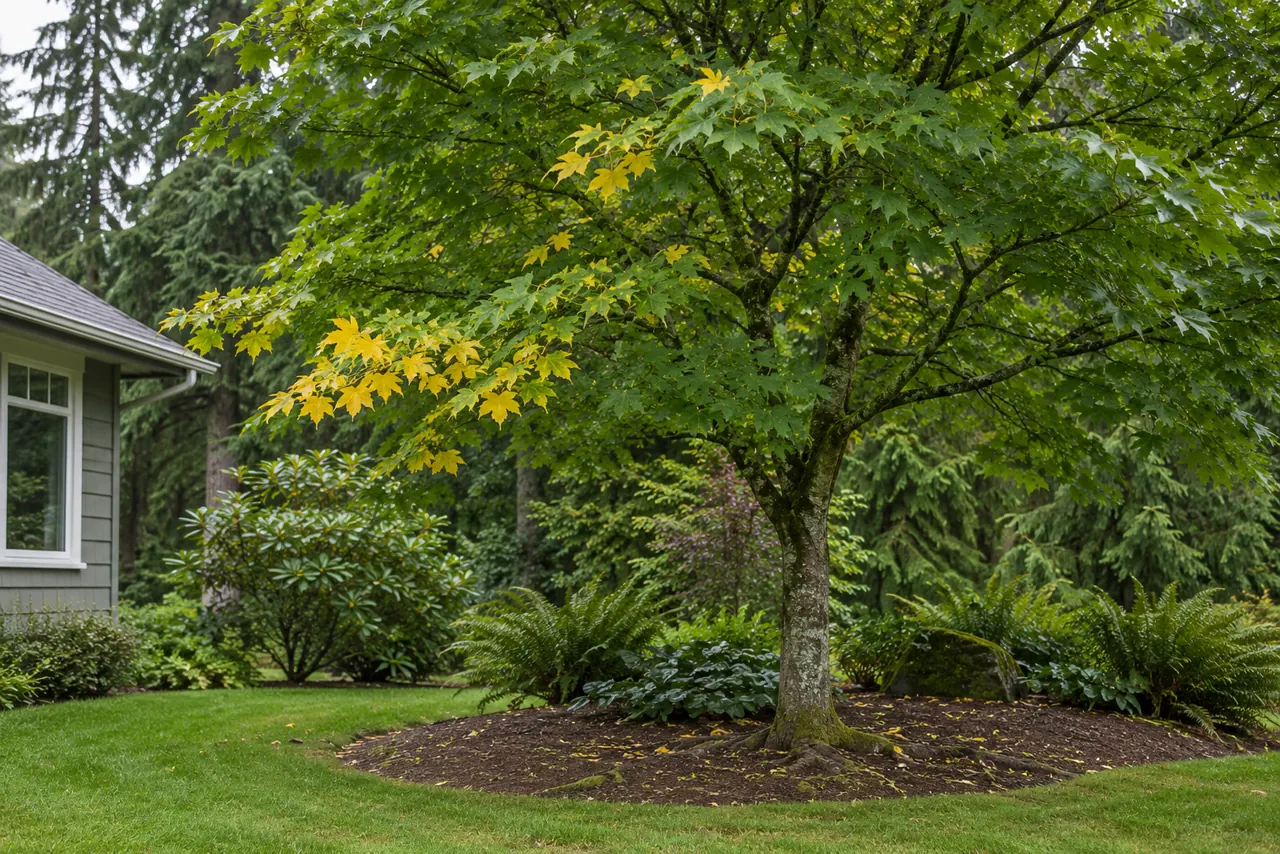
Yellow leaves are easy to notice and difficult to diagnose from color alone. Water, roots, normal seasonal change, nutrients, insects, disease, and recent site disturbance can all produce yellow foliage.
First, find the pattern
- One branch: look for a localized injury, branch problem, or change below that point.
- Older interior foliage: some seasonal shedding may be normal, especially on conifers.
- Newest leaves: root function, soil conditions, or nutrient availability may be involved.
- The whole crown: consider water, planting depth, broad root stress, or a major site change.
Also notice whether the leaf is evenly pale, yellow between green veins, spotted, scorched at the edge, curled, or dropping early.
Check moisture before reaching for fertilizer
Dry and saturated roots can both lead to yellowing. Check below the surface in more than one location. A wet surface can hide dry soil below, while frequent irrigation can keep a poorly drained area short of oxygen.
Ask what changed
Think about trenching, paving, soil added over roots, lawn removal, irrigation adjustments, pruning, storms, heat, and drought. A tree may respond long after the original disturbance.
Know when the pattern needs help
Arrange an assessment when yellowing spreads quickly, appears with wilting or dieback, follows root disturbance, or affects an important tree. Photograph the whole tree, the affected and unaffected foliage, the trunk base, and the surrounding site.
This Beginner guide is meant to help you recognize a useful pattern. The Advanced Chlorosis guide explains nutrient mobility, soil pH, testing, and treatment selection in greater depth.
If yellowing is spreading, appears with dieback, follows root disturbance, or does not fit a normal seasonal pattern, an appointment can connect what is happening in the leaves with water, roots, soil, and recent site changes.
References: Washington State University, Plant Problem Diagnosis; Washington State University, Plant Mineral Nutrition and Fertilizers.