
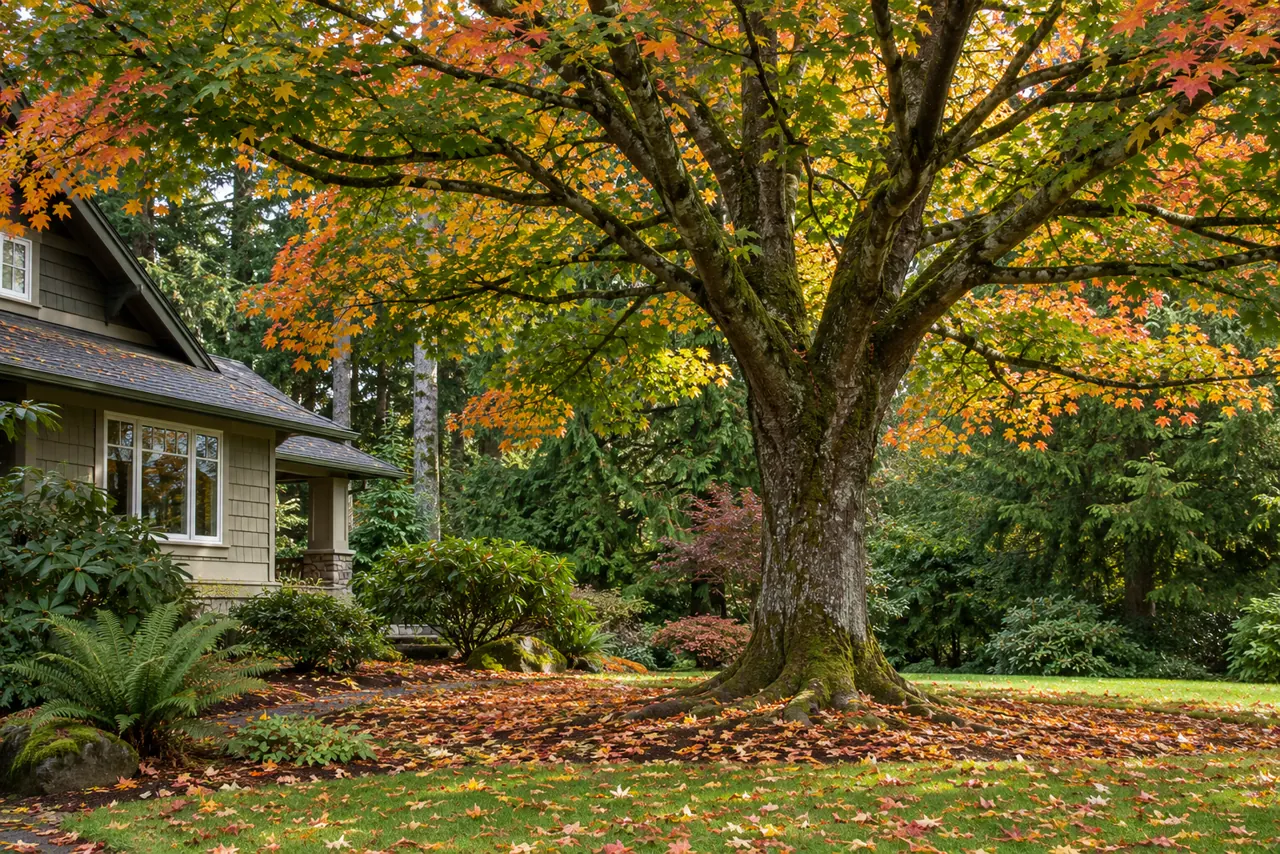
Fall reveals the season a tree just completed. It is a good time to compare growth, record changes, and plan work, but not every falling leaf or yellow needle is a problem.
Separate seasonal change from an unusual pattern
Normal color and leaf drop vary by species and weather. Pay more attention to one branch changing ahead of the rest, premature thinning, dead tips, or a pattern that began during summer and continues into fall.
Look back at this year’s growth
Compare shoot length, leaf size, crown density, and dieback with earlier photographs. Reduced growth can reflect drought, root stress, shade, competition, or disease. One year provides a clue. Repeated decline establishes a stronger pattern.
Check the base before winter rain
Confirm that the trunk flare is visible, mulch is away from bark, downspouts do not discharge against the tree, and irrigation is adjusted for cooler weather. Areas that stayed wet during summer deserve attention before prolonged rain.
Plan pruning around the objective
Fall observation does not mean every tree should be pruned immediately. Species, condition, weather, flowering, and pest activity affect timing. Record the branch or clearance concern now so the eventual work has a clear purpose.
If the tree finished the season with new dieback, unusual early color, poor growth, or root-zone changes, an appointment can identify what should be addressed before winter and what is better evaluated during the next growth cycle.
References: International Society of Arboriculture, Mature Tree Care; Washington State University, Pruning Woody Landscape Plants.