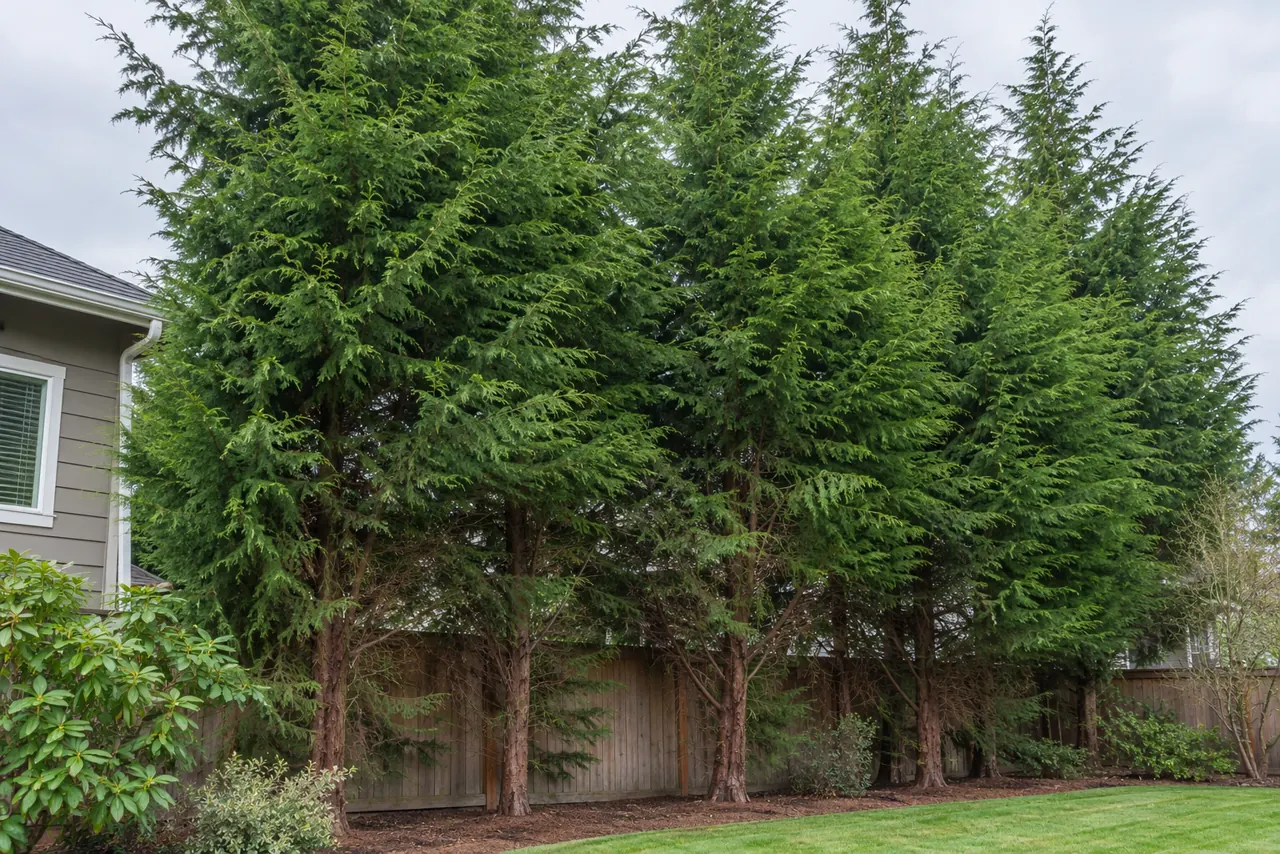
Leyland cypress is often planted for one reason: privacy as soon as possible. It delivers. Young plants can grow rapidly and close a gap in only a few seasons.
The same growth that makes the screen attractive can become its long-term challenge. Leyland cypress is not a naturally small hedge. It is a large, fast-growing conifer, and a row planted for quick coverage eventually has to share light, water, soil, and physical space.
Plan around the mature screen
Purchase-day spacing can look empty, which encourages close planting. As the trees widen, crowded crowns shade one another and interior foliage declines. Once lower branches lose light and become bare, cutting the outside harder does not reliably rebuild a dense green wall from old interior wood.
Before planting, consider mature height and width, distance from structures and property lines, access for future care, and how much space the root systems will share. A screen should solve the privacy concern without creating a permanent conflict with roofs, utilities, walkways, or neighboring property.
Decide whether the goal is a hedge or a tree row
A formal hedge requires regular, light management while foliage is still present near the intended outline. Waiting until the row is far beyond the desired size can leave no good pruning point within green growth.
A natural tree row needs enough room to develop its conical form. It may provide excellent screening, but it should not be expected to remain at hedge height through occasional severe cutting.
Keep light at the bottom
Privacy usually matters near eye level. If the top becomes much wider than the lower portion, it shades the foliage that provides screening where people need it. A slightly narrower upper profile allows more light to reach lower branches.
Avoid lifting every tree from below unless clearance is genuinely required. Removing low live branches creates a permanent opening beneath the screen.
Water and roots often decide how the row ages
Closely spaced trees compete for moisture during dry summers. One failing irrigation line, compacted strip, buried root flare, or poorly drained section can create a visible pocket of decline. Wet roots can be as damaging as dry roots.
When individual trees begin browning, look for the pattern. One tree in a row may have a local root or irrigation problem. Several declining in an expanding group may justify investigating drainage, root disease, or a shared site condition. Insects found on a declining tree are not automatically the original cause.
Correct small problems before they become large cuts
Early pruning can guide shape and remove competing or damaged growth while cuts remain small. Later work should have a clear objective and preserve enough living foliage for the tree to function. Severe topping may produce an irregular outline, exposed brown interior, and repeated maintenance without solving the mismatch between tree size and available space.
When replacement becomes the better plan
A screen may reach a point where it is too wide, bare below, repeatedly failing, or incompatible with the site. Replacing selected plants without understanding why they failed can repeat the same pattern. A phased plan may preserve privacy while soil, spacing, irrigation, and replacement species are reconsidered.
If the row is thinning, browning, or outgrowing the property, an appointment can separate a pruning problem from a root, water, disease, or design problem and help determine whether restoration or phased replacement is more realistic.
References: Washington State University Extension, Small Trees for the Home Landscape; Washington State University, Pruning Woody Landscape Plants; Oregon State University Extension, Why Are My Trees Dying?.