
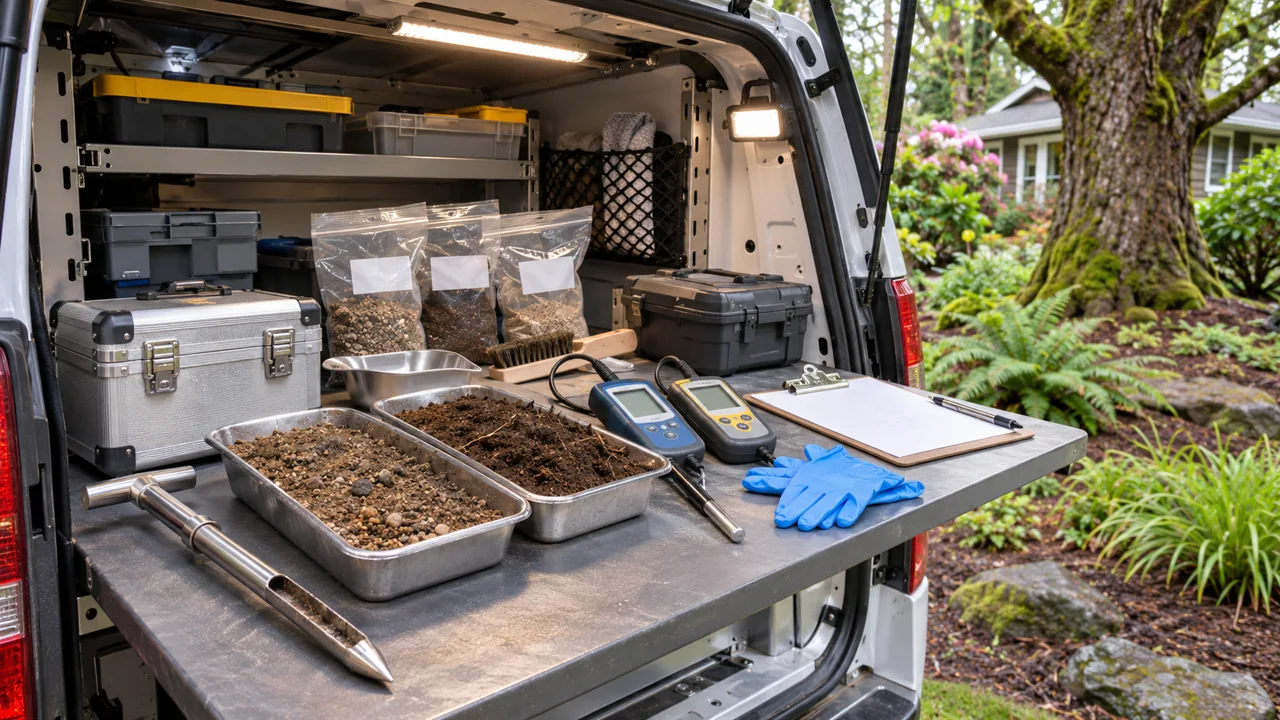
A soil report can look definitive because it contains precise numbers. Those numbers describe the sample submitted to the laboratory. They do not examine the tree or the entire root zone.
Start with a question the test can answer
Useful questions include whether pH may limit nutrient availability, salts are elevated, a specific nutrient is low or excessive, or affected and healthy areas differ. “Why is my tree dying?” is too broad for a fertility panel alone.
The sample defines the answer
Imported fill, concrete, irrigation, fertilizer history, drainage, and old planting beds can create different soil zones within one property. Combining affected and unaffected areas may average away the difference you need to understand.
Follow the laboratory’s directions for depth, number of subsamples, tools, and labeling. Keep comparison areas separate when the purpose is to find a difference.
pH affects availability
A nutrient may be present while remaining difficult for roots to use. Species differ in the pH range they tolerate. Changing pH around an established tree is gradual and uneven, so amendments should follow a measured condition and a realistic objective.
Nutrient values need the tree and site
A low value can support a recommendation without proving it caused the visible symptom. Saturated, dry, compacted, cold, diseased, or damaged roots may fail to absorb nutrients that are present. Adding more of an adequate nutrient can increase salts or create imbalance.
Pair the report with the tree and site
- A buried trunk flare or girdling root
- Severed, compacted, or decayed roots
- Uneven irrigation or how long soil stays saturated
- Active pests, pathogens, or vascular injury
- Whether the sampled soil represents the active root area
Turn results into a site-specific plan
The recommendation may be no fertilizer, a selected nutrient, a pH strategy, irrigation changes, mulch, root-zone protection, additional testing, or monitoring. More ingredients are not automatically better.
Our soil programs use the report with a site assessment so amendments can be selected for a defined need and adjusted as research, conditions, and tree response change. This focused approach can improve new growth, reduce chlorosis, support more consistent moisture, and strengthen the root environment over time.
If you have a report that is difficult to connect to the tree, an appointment can help interpret it alongside roots, water, species, symptoms, and treatment history before money is spent on amendments.
References: Washington State University, Soil Science; Washington State University, Urban Soil Management; WSU Extension, Organic Soil Amendments; ISA Tree and Shrub Fertilization Best Management Practices.