
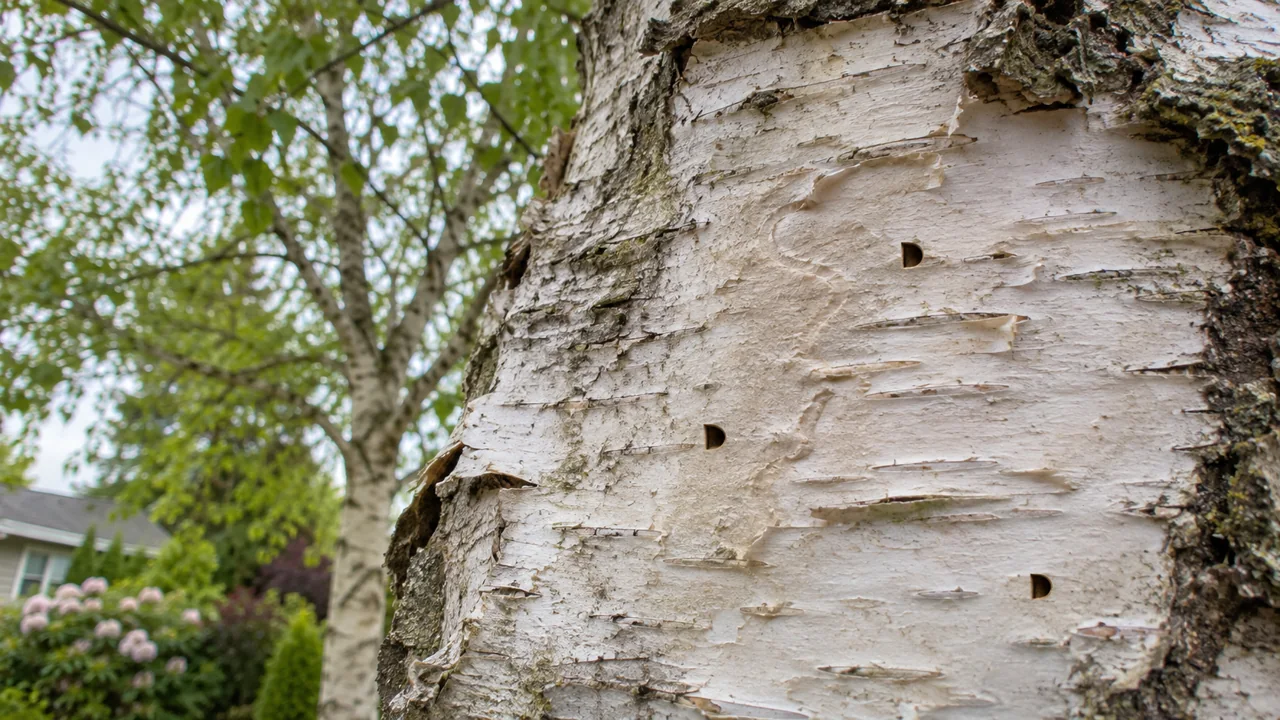
Bronze birch borer often begins where it is hardest to see: high in the crown and beneath the bark. By the time dieback reaches much of the tree, larvae may have been feeding internally for a year or longer.
That delay makes early recognition and preventive care especially important.
Watch the top of the crown
Early decline often appears as sparse foliage, wilting, yellowing, or twig and branch death near the top. The pattern may progress downward as feeding disrupts water and nutrient movement.
Crown dieback is not unique to this insect. Drought, root injury, disease, and planting problems can look similar, so combine the crown pattern with bark signs and tree history.
Look for signs on bark
- Small D-shaped adult exit holes
- Wrinkled, ridged, or rumpled bark over larval galleries
- Brown staining around affected bark
- Focused woodpecker activity
An exit hole confirms that a flatheaded borer emerged there. It also means internal feeding began well before the hole appeared. Do not peel living bark from the tree to search for galleries.
Drought increases vulnerability
Birches generally perform best with cool, consistently moist root zones. Heat, dry soil, storm damage, and root stress can make susceptible birches easier for bronze birch borer to colonize. Mulch, appropriate irrigation, and protection from compaction strengthen the conditions birches need to defend themselves. When larvae are already present, systemic treatment can address the insect while root-zone care supports uptake and recovery.
Early treatment matters
Systemic insecticides can reach larvae feeding inside a tree, and treatment is most successful before major crown loss. A birch with a functioning canopy and vascular system can distribute the material while coordinated water and soil care supports continued growth. Not every birch can recover after extensive crown and vascular damage, so early treatment provides the strongest opportunity to preserve a valuable tree.
Published Pacific Northwest guidance describes professional trunk injection with emamectin benzoate as one management option. Product, method, timing, tree condition, pollinator considerations, and the current label all belong in the decision.
Why we include the root zone
Our approach combines supported insect management with soil amendments, water management, and root-zone care selected for the site. The insect treatment addresses feeding inside the tree. The soil work supports moisture, root function, and the birch’s ability to sustain growth and defense.
Avoid summer pruning during adult activity
Fresh pruning wounds and stress can increase susceptibility while adults are active. Unless work is necessary for safety, pruning should be timed with local activity and the tree’s condition in mind.
If a birch is thinning at the top, showing D-shaped holes or rumpled bark, or standing near another birch that recently died, request an appointment promptly. Healthy-looking valuable birches may also benefit from preventive planning when local pressure is established.
References: Oregon State University Extension, Homeowner Guide to Managing Bronze Birch Borer; OSU Extension, Treatments for Bronze Birch Borer; Washington State University, Pruning Woody Landscape Plants.