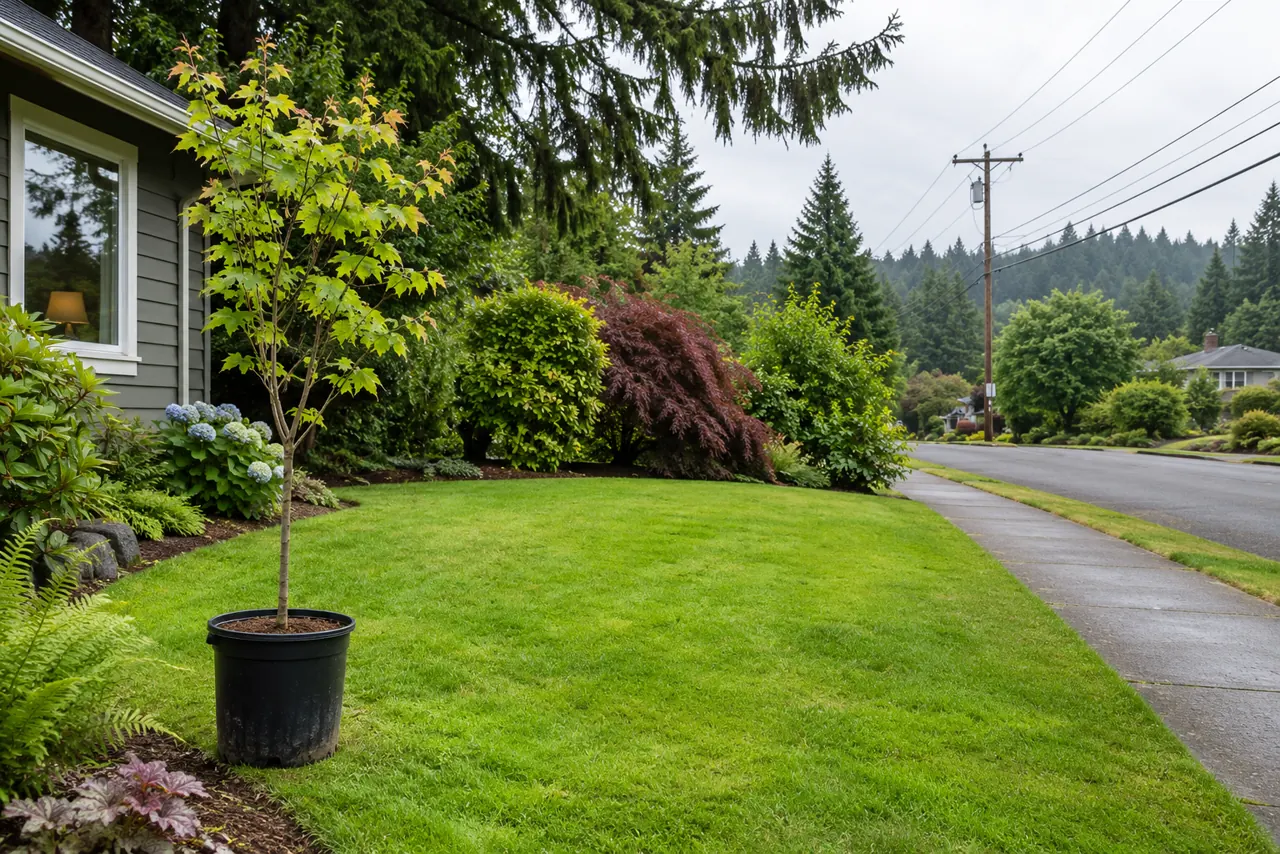
A young tree can make almost any planting space look generous. The decision should be based on the tree it is expected to become.
Look up
Check overhead utility lines, roofs, signs, streetlights, and neighboring crowns. A large-maturing tree cannot be kept permanently small beneath a utility line through occasional pruning.
Look down
Roots need oxygen, water, and usable soil volume. Consider compaction, drainage, underground utilities, retaining walls, pavement, and irrigation. A narrow strip surrounded by hard surfaces is a harsher site than an open yard with the same sunlight.
Look outward
Picture the mature crown. Will it have room away from the building and property line? Will necessary clearance require repeated cuts? Does the tree fit the view, shade, screening, and maintenance goals for the property?
Choose for future summers
Match the species to expected heat, summer moisture, drainage, and exposure. A tree that already struggles in the site may require increasing support as dry periods become longer.
Find the trunk flare before planting
The trunk flare is where the stem broadens into the main roots. It should remain visible near the finished soil level. Dig wider than the root system and no deeper than needed. Address significant circling roots and avoid creating a small pocket of heavily amended soil that holds water differently from the surrounding site.
Plan establishment before the tree arrives
Newly planted trees need consistent moisture while roots expand, but the schedule must reflect soil and weather. Apply a broad, shallow mulch layer while keeping it away from the trunk. Limit initial pruning to damaged or clearly necessary branches.
If species, placement, or mature size is uncertain, an appointment before planting can prevent years of corrective pruning or an expensive replacement.
References: International Society of Arboriculture, Planting a Tree; Washington State University, Urban Soil Management.