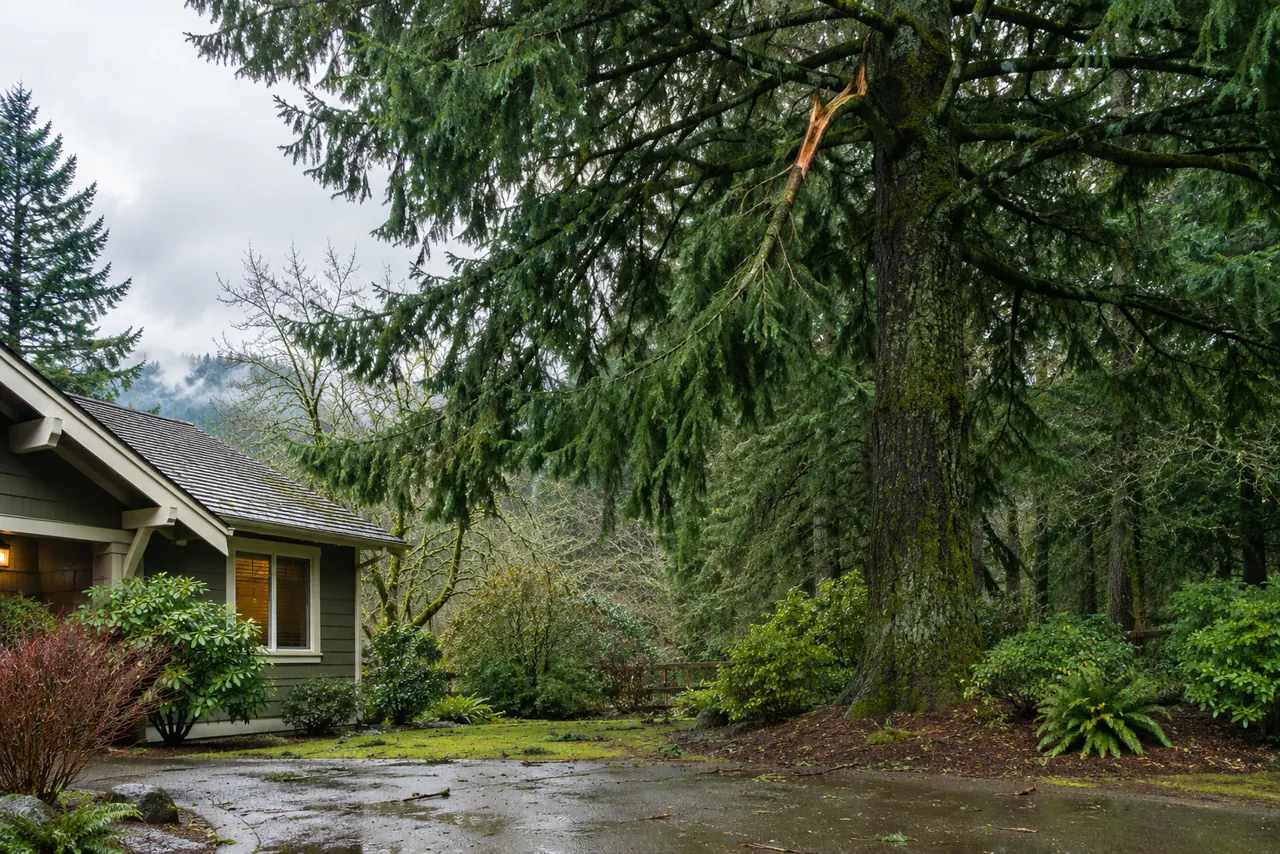
Winter storms can change a familiar tree in a few minutes. The first task is not cleanup. It is deciding whether anyone should enter the area.
Before approaching, look for movement and electricity
Stay away from hanging branches, newly leaning trees, fresh trunk splits, lifted soil, and any tree or branch touching an electrical conductor. Wood under tension can move suddenly when cut or shifted. Contact the utility for electrical involvement and emergency services when there is immediate danger to people or property.
Compare the tree with its normal position
From a safe location, look for a new lean, changed branch angle, missing portion of the crown, crack at a major union, or soil disturbance around the base. Photographs taken before the storm are especially useful because memory is unreliable after a dramatic event.
Not every broken branch means the tree is lost
A cleanly broken small branch and a split through the trunk are very different injuries. The size and location of the damage, remaining crown, species, decay, targets, and the tree’s overall condition affect what can be retained.
Record details without standing beneath the crown
Note when the storm occurred, whether the soil was saturated, where the damage is located, and what could be struck. Use distance or zoom for photographs. Do not climb, use a ladder, or begin cutting suspended branches.
Once the immediate area is controlled, an appointment can determine whether damaged parts can be pruned, whether a more detailed risk assessment is needed, and what should be monitored through the next storm cycle.
References: International Society of Arboriculture, Storm-Related Tree Damage; ISA, Managing Hazards and Risk.