
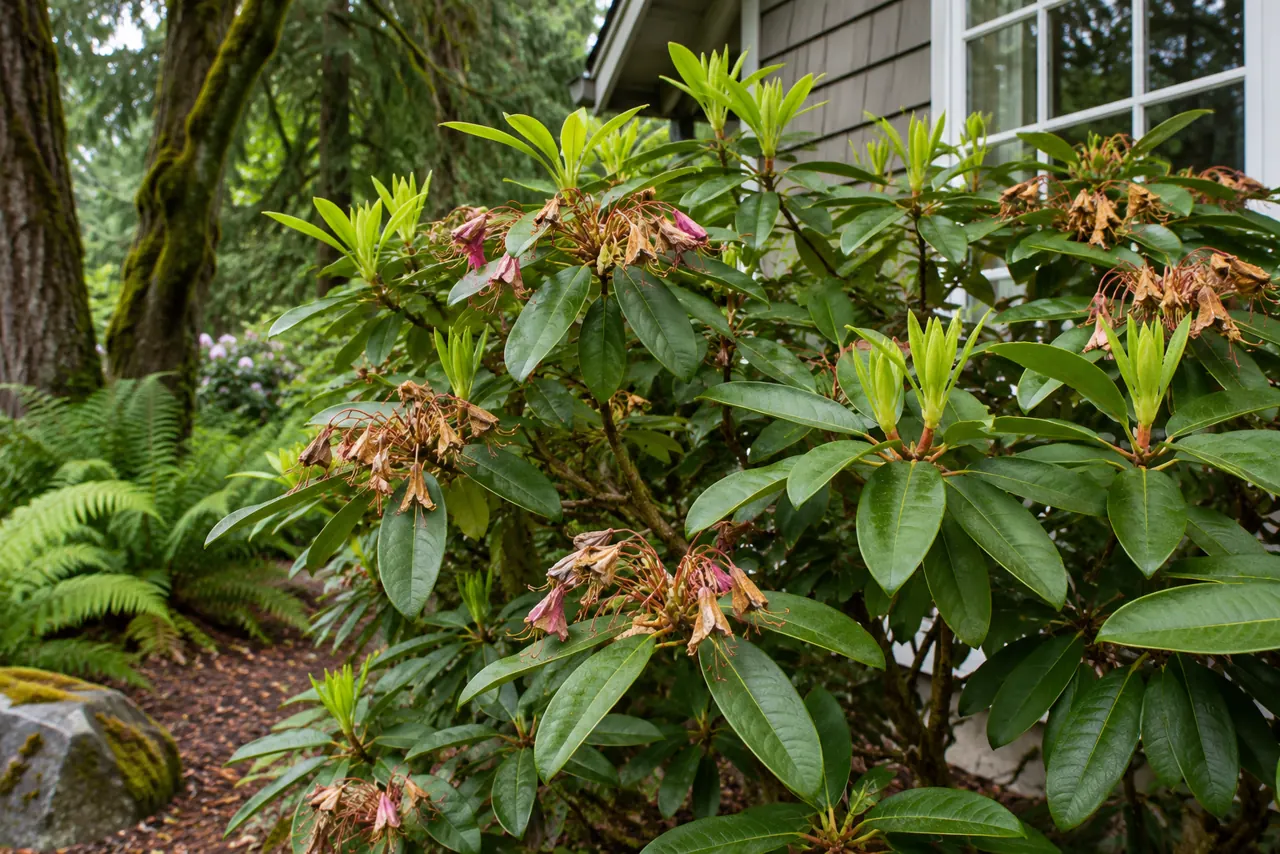
A rhododendron can tolerate pruning, but timing and purpose determine whether the result includes next year’s flowers.
Know the difference between deadheading and pruning
Deadheading removes spent flower clusters. Pruning changes stems, size, structure, or foliage. Removing an old bloom does not have the same effect as shortening the branch that carries future buds.
Time work around flower-bud development
Many rhododendrons bloom on buds formed during the previous growing season. If preserving flowers is the priority, pruning soon after bloom generally leaves more time for new growth and bud formation. Dormant-season pruning can remove visible flower buds.
Start with the reason
The objective may be removing dead stems, restoring clearance, reducing an overextended branch, opening a view into the plant, or gradually renewing an old shrub. Each calls for different cuts.
Use the fewest useful cuts
Follow the branch to a suitable lateral or its point of origin. Shearing the outside repeatedly can create a dense surface and bare interior. Selective pruning preserves foliage at different depths and keeps the plant looking natural.
Renew old plants in stages
Some established rhododendrons can produce new growth from older wood, but response varies with type, vigor, light, and site conditions. Severe cutting can sacrifice flowers, expose previously shaded stems, and leave the plant visually empty. Gradual renewal provides a chance to judge the response before removing more.
If the plant is too large, bare inside, or declining as well as overgrown, an appointment can separate a pruning problem from a light, root, drainage, or site problem.
Reference: Washington State University, Pruning Woody Landscape Plants.