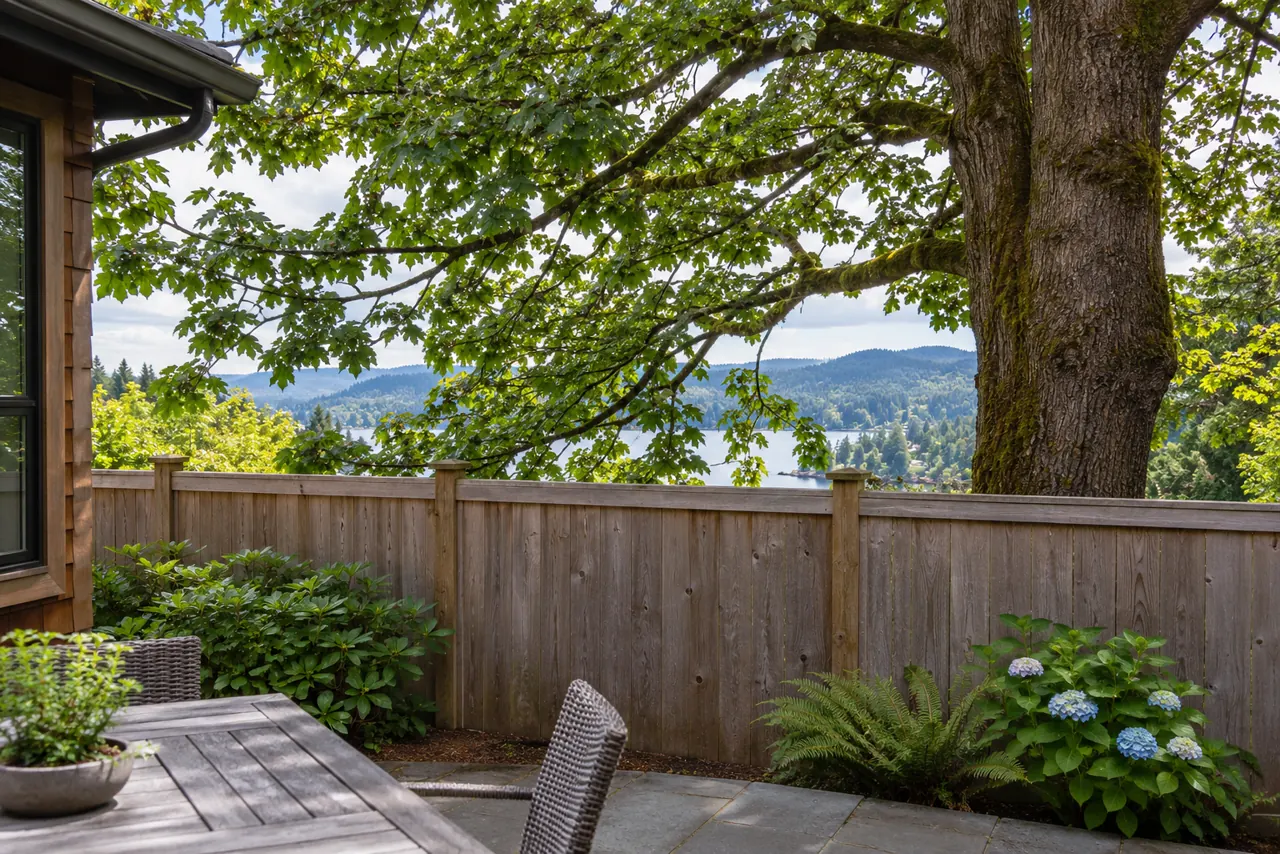
A branch may cross your view while belonging to a tree rooted on another property. Before discussing cuts, establish who owns the tree and who has authority to approve the work.
Start with a conversation, not a saw
Show the neighbor the exact viewing point and the part of the crown involved. “Improve this narrow sight line” is easier to evaluate than “cut the tree down to the roof.” Photographs from the important viewpoint can help both owners discuss the same objective.
Permission and ownership come first
Property and tree law varies by location and circumstance. This article is arboricultural guidance, not legal advice. Confirm ownership and written permission before work begins, and seek local legal guidance if boundaries or rights are disputed.
The tree still has limits
Permission does not make every cut biologically appropriate. Removing too much live crown, stripping one side, or topping can create lasting injury and future maintenance. A smaller view window may be more durable than a broad reduction.
Agree on the result and future care
Clarify who selects the arborist, who pays, what branches are included, how debris is handled, and whether repeat pruning is expected. A shared plan reduces surprises after the crown looks different from both properties.
An appointment with the owners involved can translate the desired sight line into a pruning objective and determine whether the tree can accommodate it responsibly.
References: Washington State University, Pruning Woody Landscape Plants; ISA Best Management Practices: Pruning.