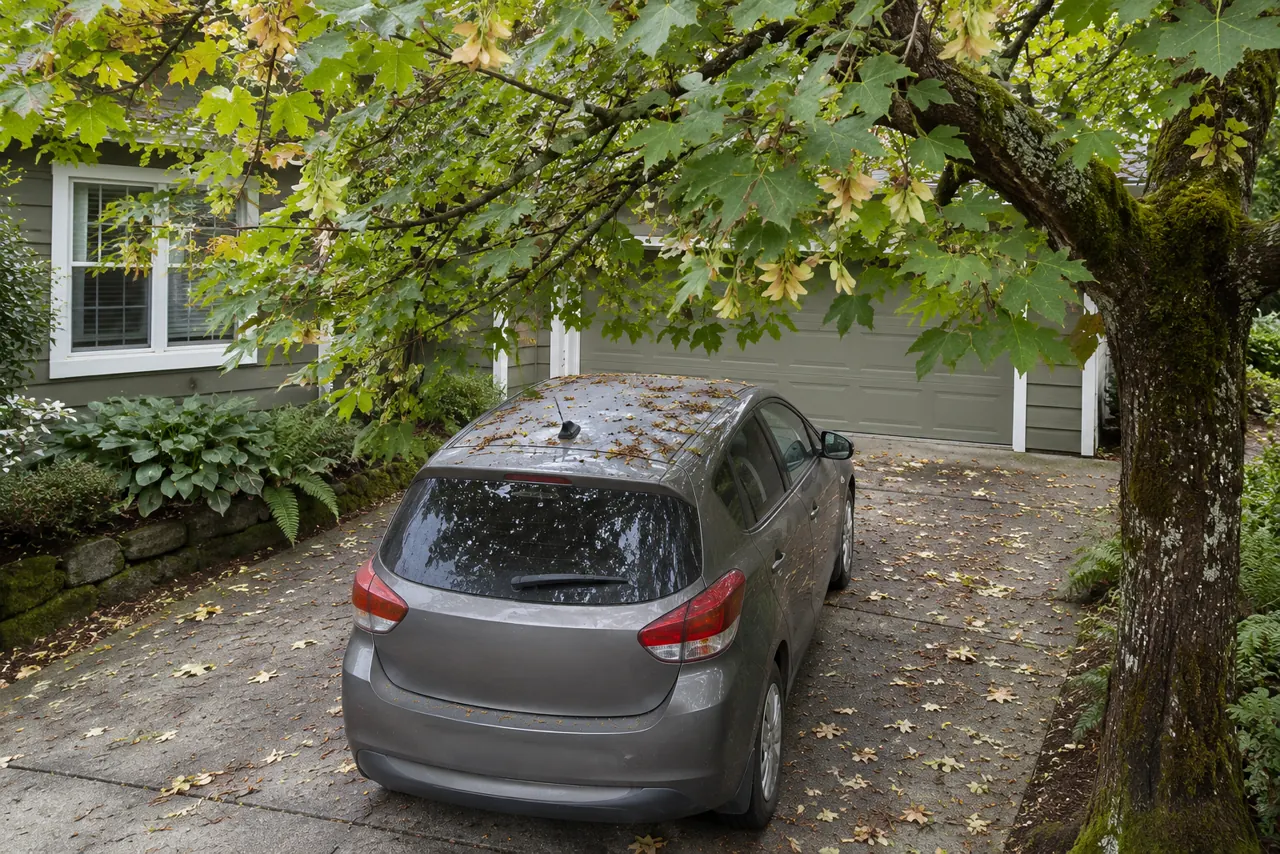
A tree over a driveway will drop something. Leaves, flowers, pollen, fruit, cones, needles, bark, and small twigs are part of normal growth and seasonal change.
Begin by naming the debris
Normal leaf drop calls for a different response from newly broken branches or increasing deadwood. Record what is falling, how large it is, when it occurs, and whether the pattern changed recently.
What pruning can accomplish
Pruning may remove dead, broken, damaged, or poorly positioned branches. It may create defined clearance or reduce a supported concern involving a specific part of the crown.
What pruning cannot promise
Thinning does not stop a tree from producing leaves, flowers, seeds, or bark. Heavy pruning can stress the tree, expose remaining branches, and stimulate new growth without eliminating ordinary litter.
Sudden debris deserves a closer look
A new increase in dead twigs, green branch tips, torn limbs, or bark pieces may indicate storm injury, drought, animals, insects, disease, or structural change. Keep out from beneath large hanging material and document the whole crown.
Consider the target as well as the tree
Moving a parking location, adjusting how the space is used, or changing cleanup practices may sometimes solve more of the concern than repeated pruning. If branches rather than seasonal litter are involved, an appointment can identify the specific pruning objective and its limits.
References: International Society of Arboriculture, Mature Tree Care; ISA Best Management Practices: Pruning.