
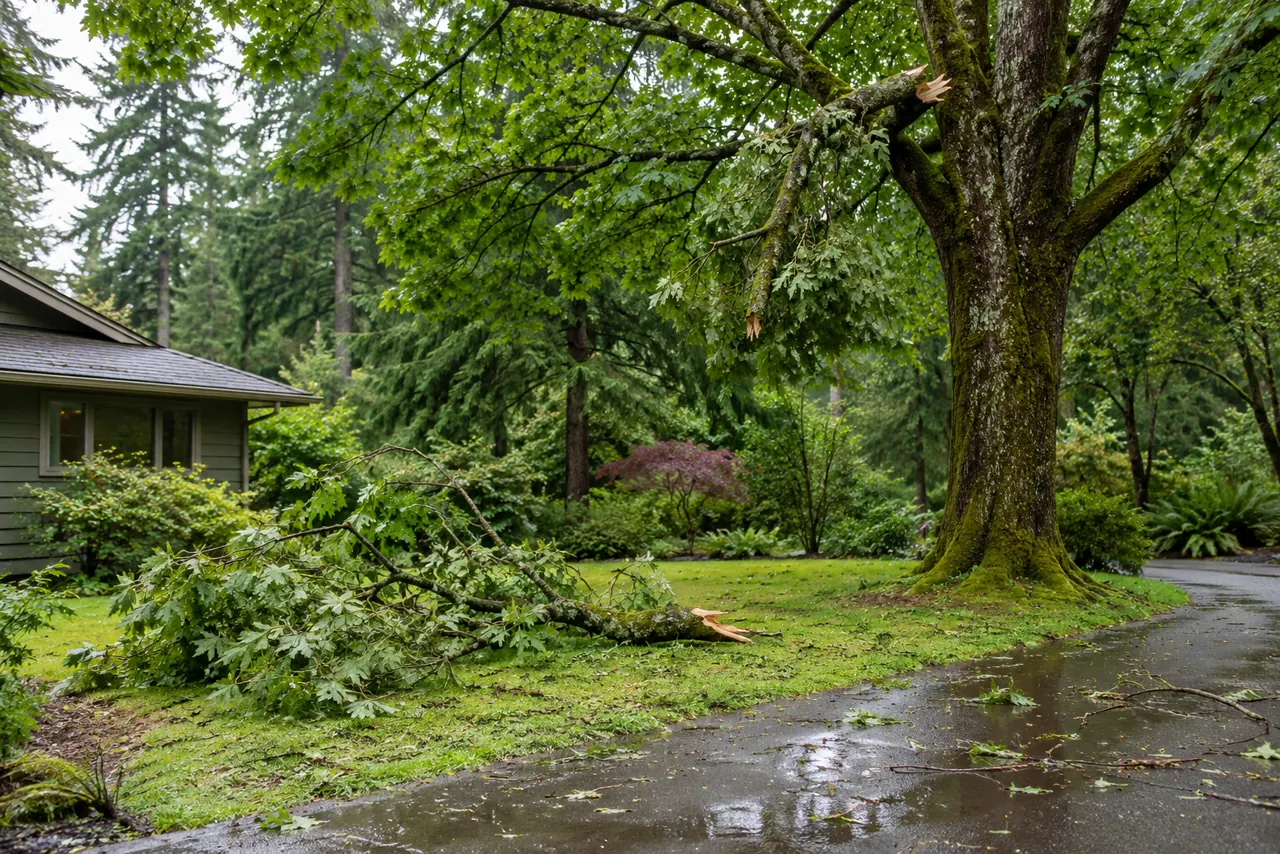
After a storm, the pressure to begin cleanup can be strong. Damaged trees are often less predictable than they appear, and the first decision should be who needs to stay out of the area.
Control the area
Move people, pets, and vehicles away from hanging branches, split trunks, uprooted trees, bent branches under tension, and trees resting on structures. Do not stand beneath damage to take a closer photograph.
Treat electrical contact as a utility emergency
A branch or tree touching a conductor can energize nearby wood, fences, tools, or the ground. Keep your distance and contact the utility. Do not attempt to move the branch yourself.
Do not release stored force
Bent and suspended wood can move suddenly when cut. Trees lodged in other trees, branches held by torn fibers, and root plates under tension require training and appropriate equipment.
Decide what can wait
Damage that is stable and outside occupied areas may be evaluated after immediate hazards are addressed. A tree with a broken branch is not automatically a removal. Remaining structure, wound location, tree condition, targets, and the amount of crown lost affect the decision.
Document from a safe position
Photograph the whole tree, damaged area, trunk base, and what could be struck. Note soil saturation, wind direction, and whether the tree changed position. These details help with triage and later assessment.
Once urgent hazards are controlled, an appointment can determine what is salvageable, which pruning is necessary, and whether the tree needs a more detailed risk assessment.
References: International Society of Arboriculture, Storm-Related Tree Damage; ISA, Managing Hazards and Risk.